
Begin in mythic Earth
Found settlements, race for wonders, manage rivals, and let terrain, growth, and succession shape the first chapter of the dynasty.
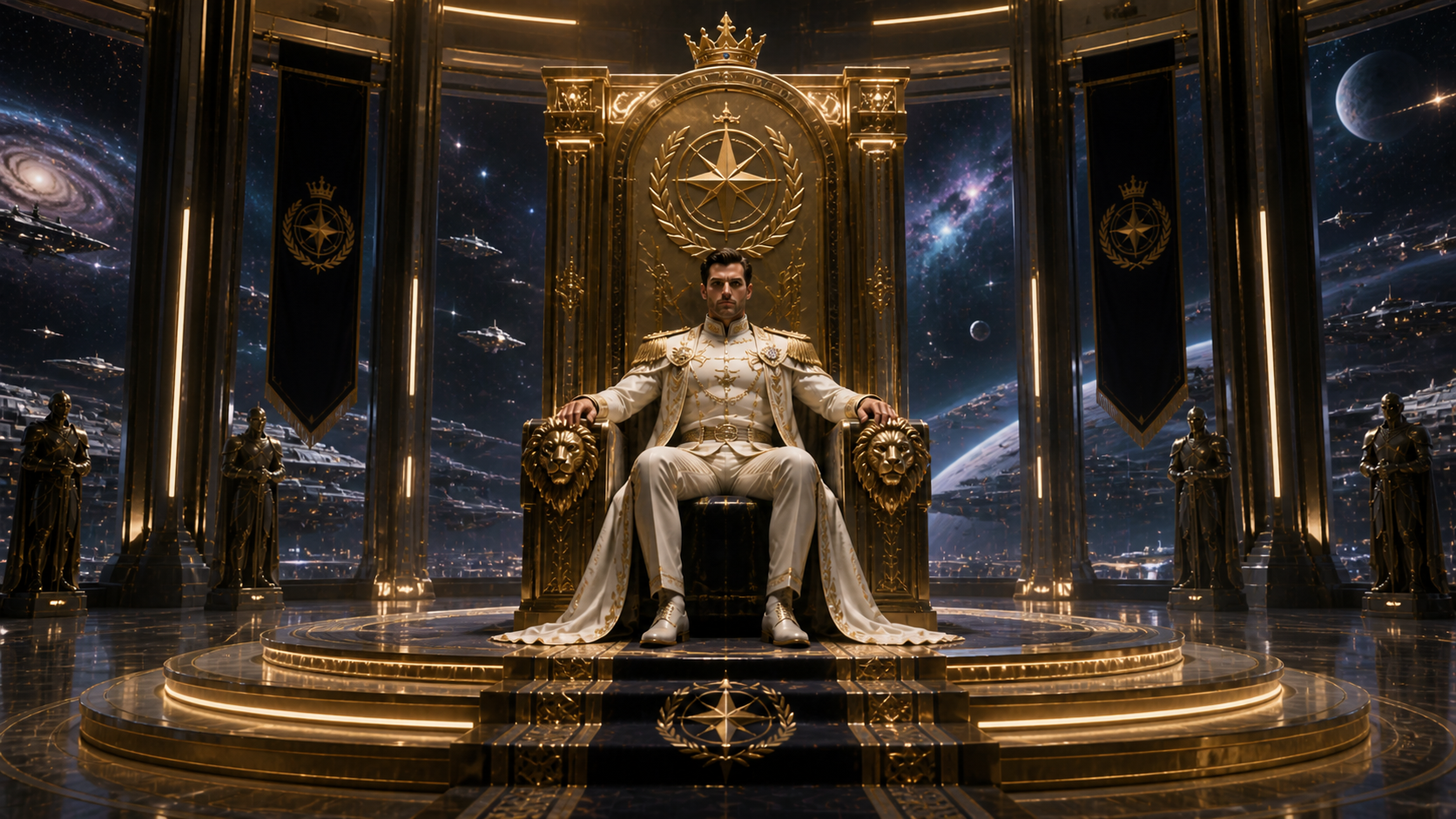
You are not leading a nation for a tidy 300 turns and then coasting. You are building a civilization that must survive faster time, larger distances, political fragmentation, and the problem of what "you" even means once immortality and copyable consciousness become real.
Found settlements, race for wonders, manage rivals, and let terrain, growth, and succession shape the first chapter of the dynasty.
City-states become planetary powers, orbit becomes strategic high ground, and the shape of distance begins to rewrite politics.
Forked consciousness, immortal factions, and provincial rulers force the empire to decide what continuity even means.
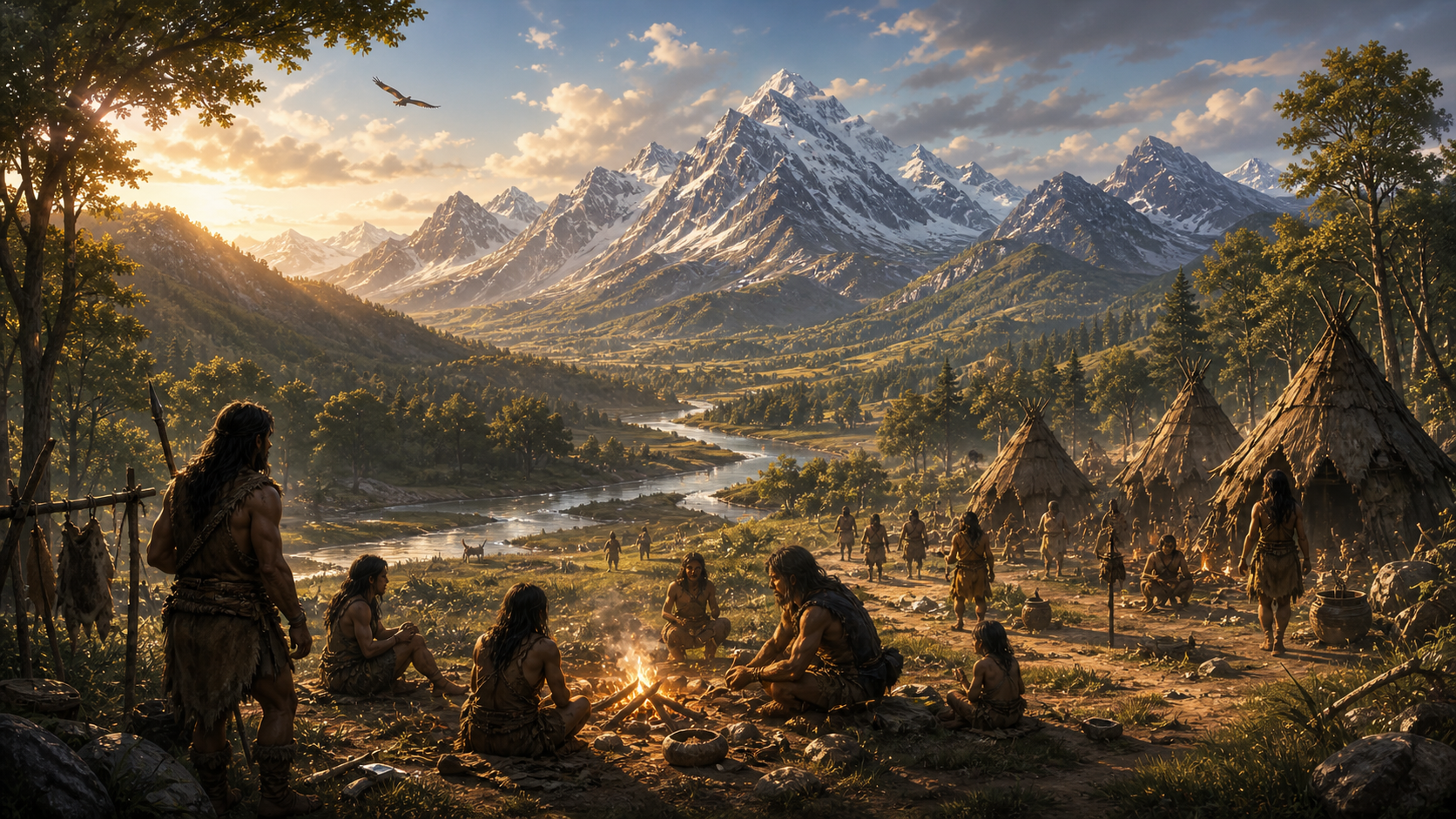
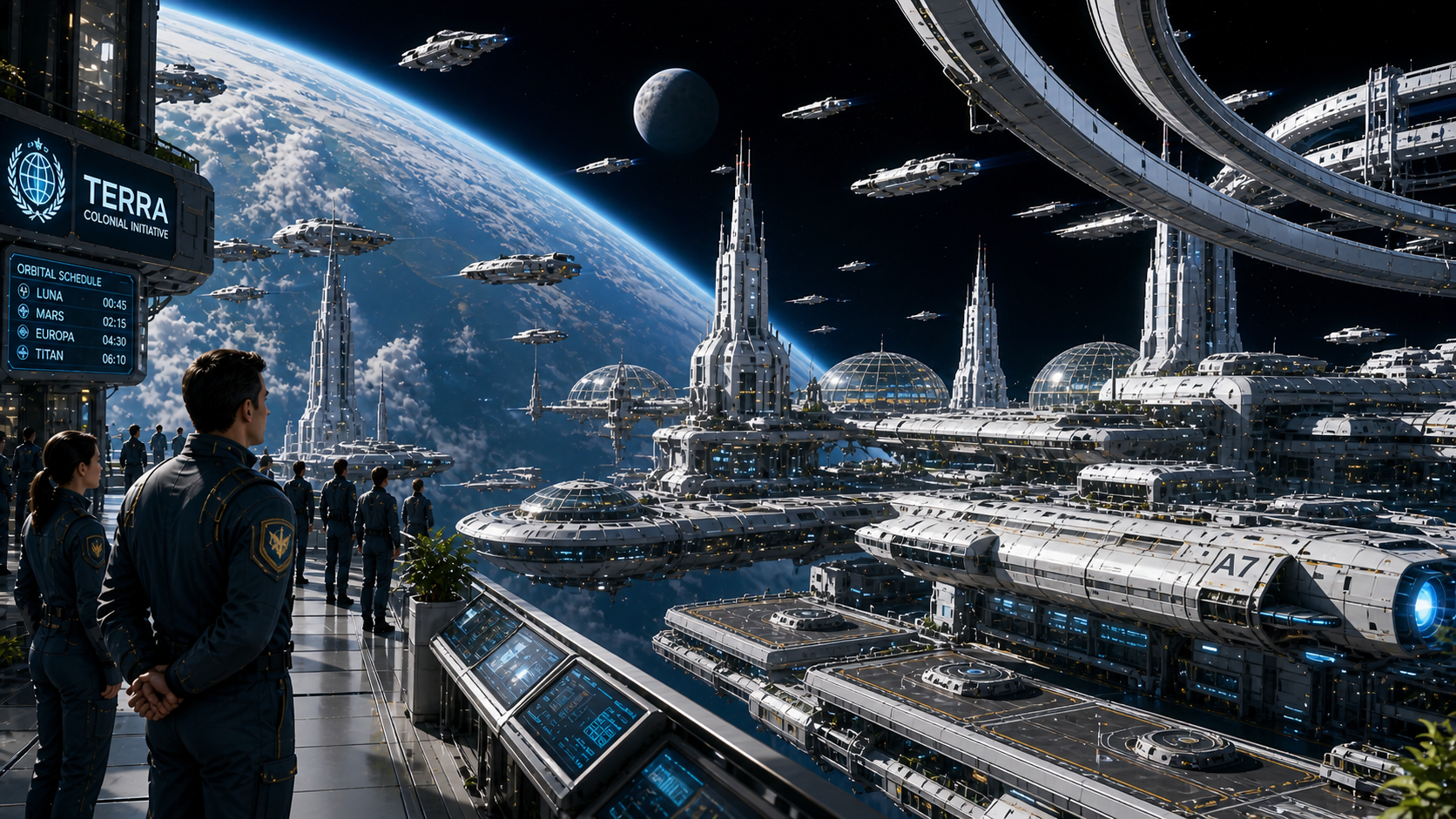
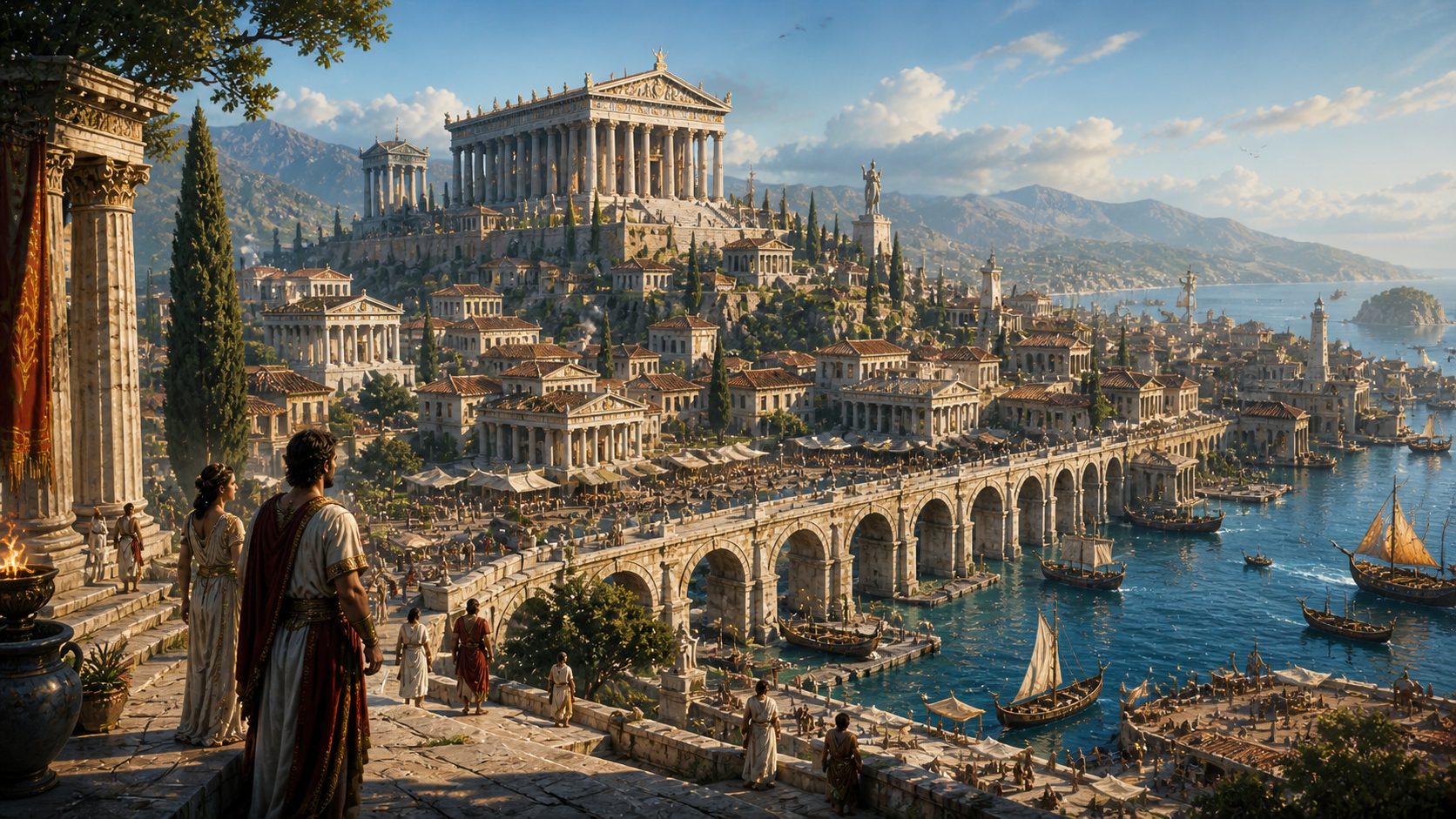
These concepts are not random mood pieces. They are numbered in sequence, so the world visibly evolves from tribal beginnings to classical statehood, industrial buildout, orbital expansion, planetary civilization, command-scale governance, and dynastic late-game futures.
The opening arc moves from valley settlements to marble capitals, industrial extraction, and neon-soaked modernity. It is the recognizable rise of civilization, staged as the prologue to a much larger campaign.


Orbit appears first as infrastructure, then Earth answers with a radiant capital age. The art should feel like a hinge here: one foot in planetary abundance, one foot already off-world.


Luna, Mars, orbital command, and system governance are not just prettier maps. They are the point where travel time, delayed orders, delegated authority, and fractured identity become central mechanics.
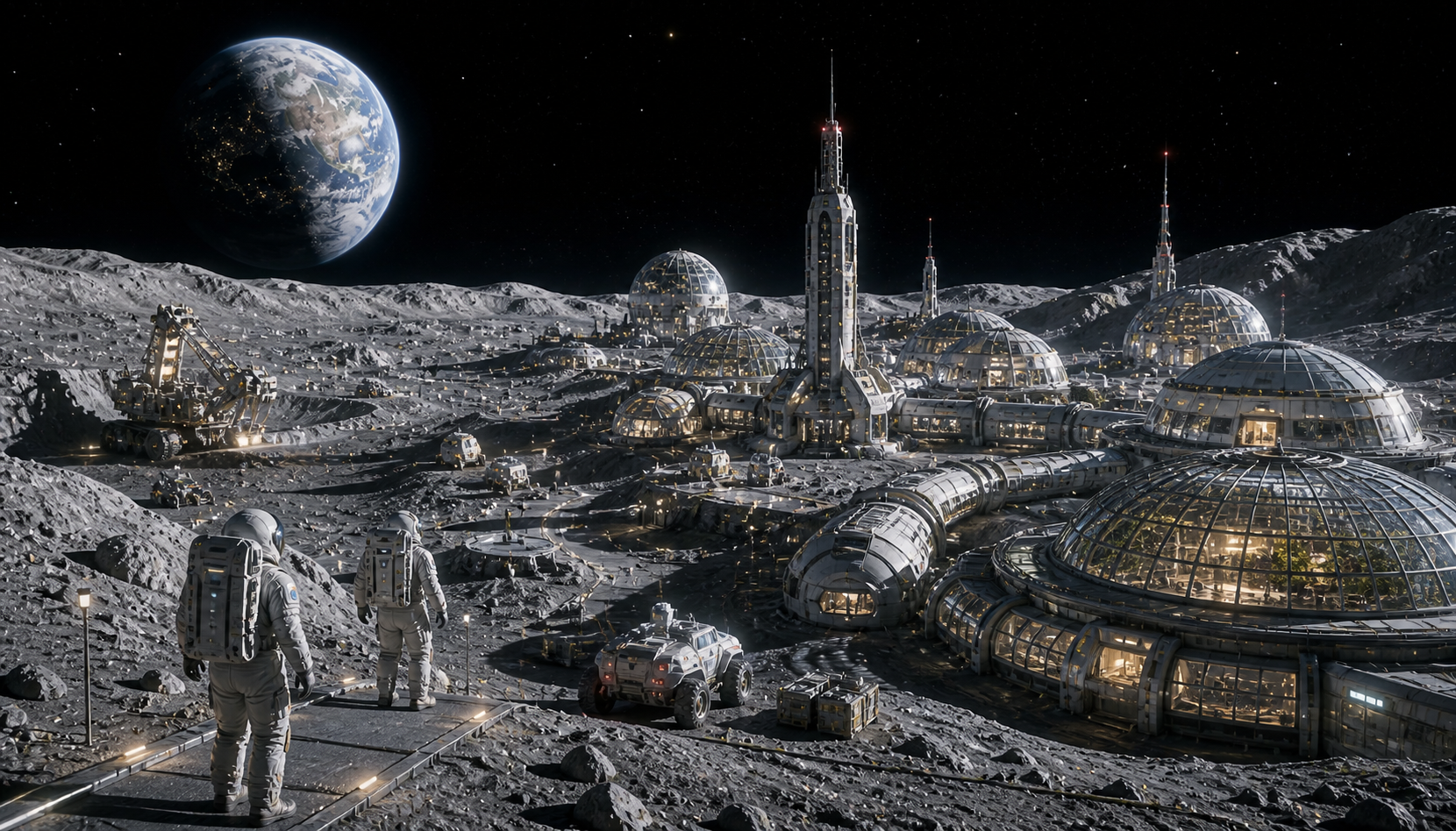
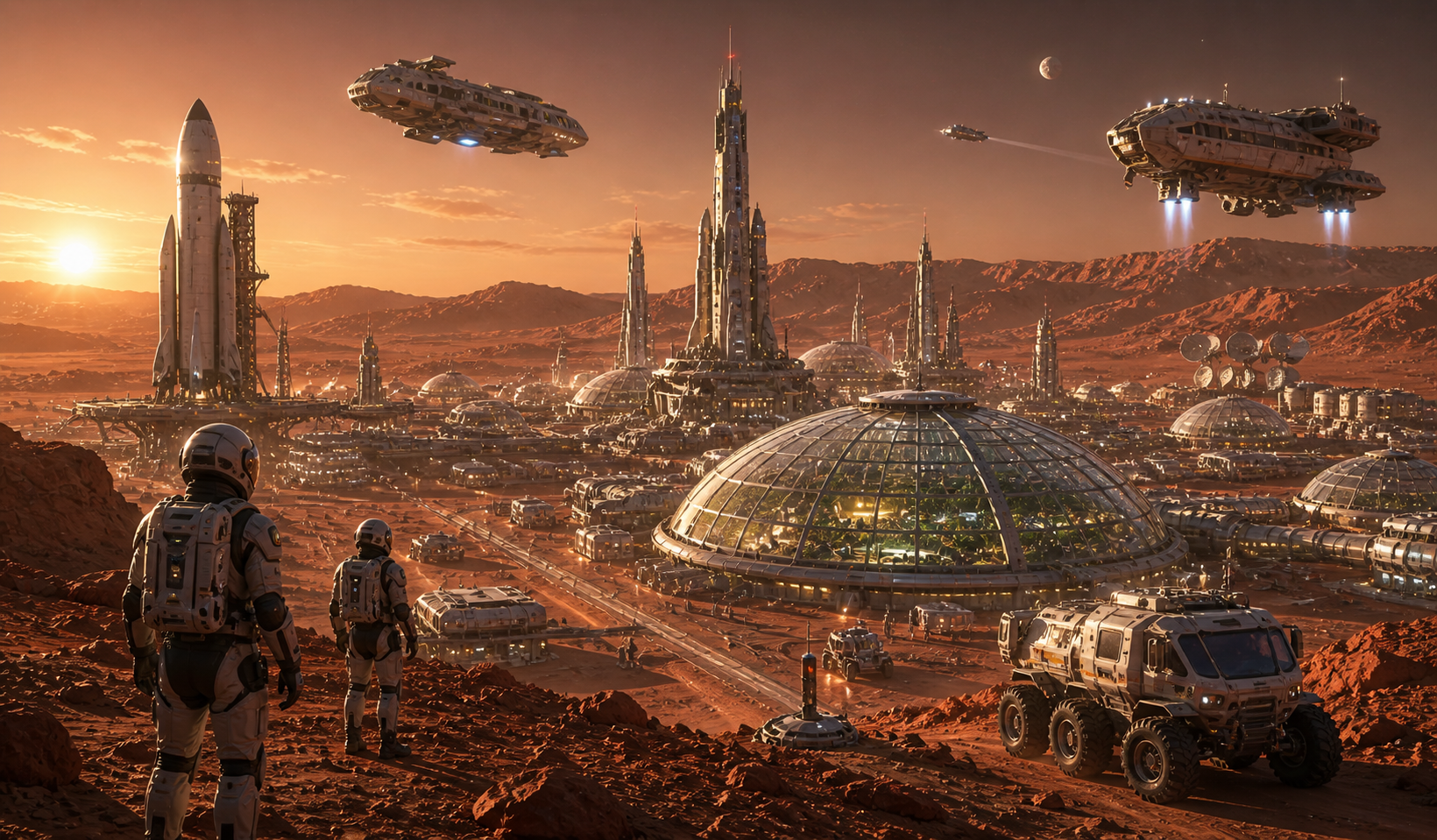


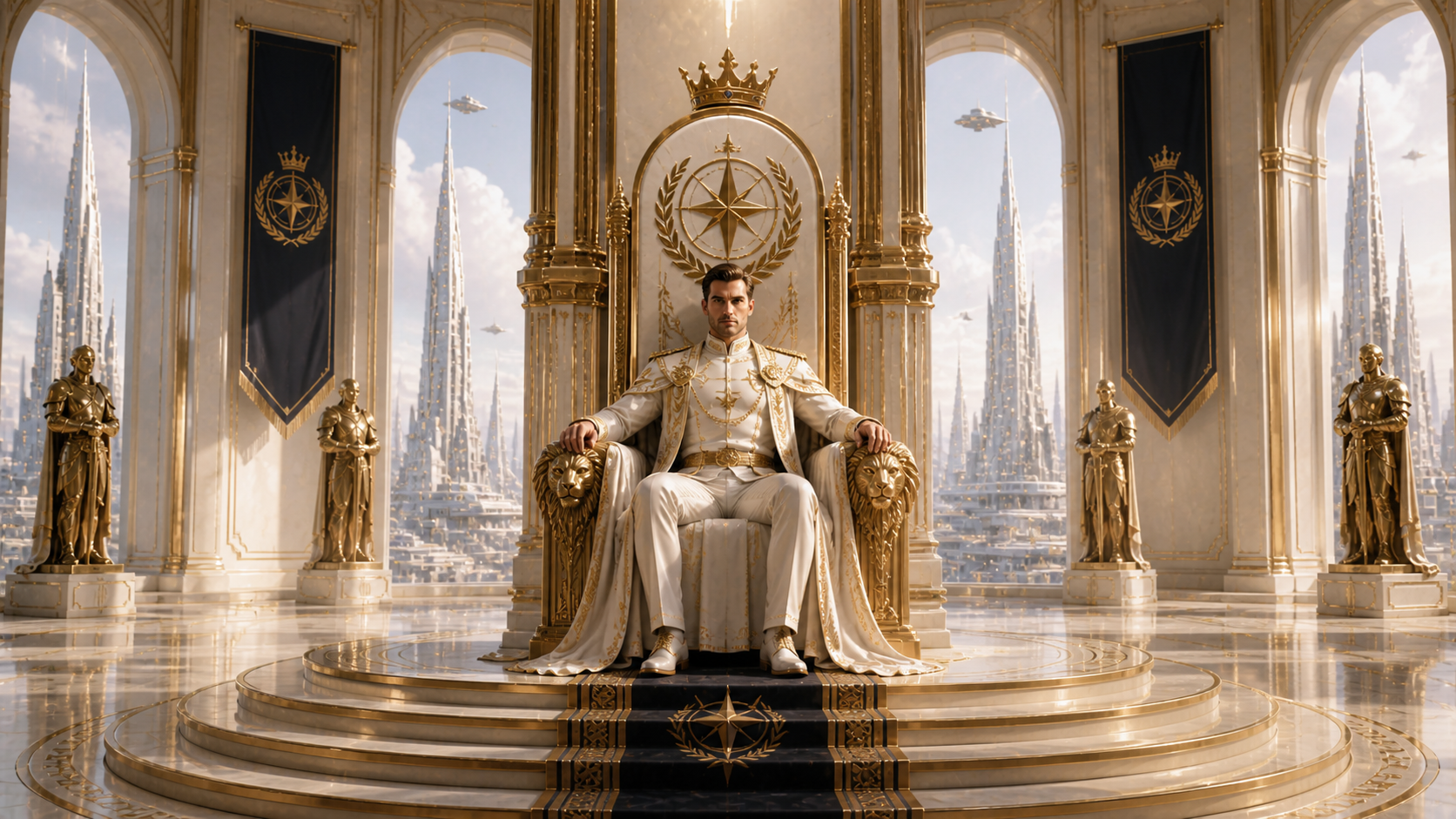
The final arc is where the project separates itself from ordinary 4X structure. The empire is no longer just larger. It is more abstract, more aesthetic, and more unstable in what counts as a self, a dynasty, or a victory.
Turns get denser as history gets more complex. Early eras breathe in decades and centuries; deep-future politics compress toward months. The clock tilts toward the part of the game that usually gets skipped.
Governors, heirs, marriages, loyalty, plots, succession, and provincial identity are not decorative. They shape production, rebellion, alliances, and war.
Surface maps, orbital layers, and system-scale movement each get mechanics native to their scale. Terrain matters on the ground. Voyage time and interception matter in space.
Late-game copies of the ruler are a strategic necessity caused by communication lag. They are rivals, heirs, commanders, schism leaders, and the sharpest expression of the game's central question: what still counts as you?
Classic 4X pressure: land, production, research, rivals, succession, and the first decisive wonders. The world starts intimate, material, and local.
Power announces itself in architecture. The city becomes both economic engine and dynastic statement.
Control of orbit becomes a form of siege. Fleets move over real travel times, and distance creates the need for delegated authority.
Biological continuity, digital backup, and full ascension become the axis that reshapes diplomacy, rebellion, legitimacy, and succession.
The player chooses the final project at campaign start. Dyson Swarm, Diaspora, Mass Ascension, Eternal Dynasty, or Galactic Hegemon each pull the campaign into different military, economic, and ideological priorities.
The current Unity project is building the Earth-first vertical slice: procedural spherical world rendering, fog of war, units, city and advisor surfaces, and the foundation for the dynasty-first MVP.
The goal of the MVP is not to fake the late game with a trailer. It is to prove that the core Earth-scale loop, variable turn cadence, governors, succession, and loyalty drama already produce a better kind of strategy story before the system expands into orbit and beyond.